Burnout doesn’t come from sex. It comes from pretending.
Most creators don’t quit because they fail. They quit because they succeed in the wrong role. They build a niche that looks good on paper, sells for a few months, and slowly eats them alive.
Usually it looks like this: playing a role that feels fake the moment the camera turns on. Forcing a persona that doesn’t match your real energy. Reinventing yourself every week just to stay interesting. Chasing trends instead of building an identity.
At first it works. Views come in, subs grow, money shows up. Then filming starts to feel heavy. Posting becomes stressful. The camera feels like work rather than expression.
That’s not a motivation problem. That’s a niche problem. This guide exists to stop it before it happens.
By the end you’ll have a niche that fits your personality, body and real life rather than someone else’s fantasy; a clear creative direction that gives you structure without locking you in a cage; and a sustainable way to grow without resenting your audience or hating your own content. This isn’t about finding what sells the most. It’s about finding what you can live with, long enough to build something real.
Film like a pro! Purchase The Home Porn Filmmaker System!
This bundle covers the full process of creating watchable, intentional home porn - from planning and identity, through filming and performance, to editing and final delivery.
Instead of random tips, you get a complete system: how to think before the shoot, how to run the scene while filming, and how to shape raw footage into a finished video people actually want to watch.
If you want your content to feel deliberate instead of accidental, this is the complete guide.
After reading you will film better than 99% percent of porn directors!
ONLY FOR $35.97
Film like a pro! Purchase The Home Porn Filmmaker System!
This bundle covers the full process of creating watchable, intentional home porn - from planning and identity, through filming and performance, to editing and final delivery.
Instead of random tips, you get a complete system: how to think before the shoot, how to run the scene while filming, and how to shape raw footage into a finished video people actually want to watch.
If you want your content to feel deliberate instead of accidental, this is the complete guide.
After reading you will film better than 99% percent of porn directors!
ONLY FOR $35.97
1. What a niche actually is (and what it isn’t)
Most creators misunderstand the word, and that misunderstanding is the fastest path to burnout. When people hear “find your niche” they imagine something restrictive, artificial, performative – something they have to invent, maintain and defend. That’s not a niche. That’s a mask.
A niche is not
- A costume. Wearing glasses, leather, latex or uniforms doesn’t create a niche. Wardrobe can support an identity, but it can’t replace one.
- A single fetish or act. “Foot content,” “JOI” or “BDSM” are categories, not niches. They describe what happens, not how it feels.
- A trend you copy. Chasing what’s popular this month forces you to constantly shift personas. That instability exhausts you and confuses your audience.
- A prison. If you feel trapped by your niche after 30 days, it was never sustainable. A real niche gives direction, not handcuffs.
If your content feels like acting, forcing, or constantly keeping up, you didn’t choose a niche. You chose a performance.
A niche is
- A consistent emotional promise to your audience.
- A recognizable version of you that feels familiar over time.
- A clear signal that tells fans: this is what it feels like to be with me.
Your niche is what lets someone watch five seconds of your content and think: yes, this is exactly why I follow her.
The reframe most creators miss
Your niche isn’t what you do. It’s how people experience you.
Two creators can film in the same room, use the same camera, do the same acts – and feel completely different. One feels safe. Another feels exciting. Another feels dominant. Another feels playful. That difference is the niche.
Performance-based niches collapse because they require energy you don’t naturally have. Emotional niches last because you don’t have to switch on a character: your reactions feel real, your body language aligns with your persona, and your content feels coherent instead of chaotic. When your niche matches your natural energy you don’t feel like you’re creating content – you feel like you’re expressing yourself with a camera present.
Same acts, different niches
- Soft girlfriend – comfort, reassurance, warmth, emotional closeness. Slow pacing, eye contact, gentle voice, presence.
- Dominant couple – control, power, structure, mutual confidence. Clear roles, intentional movement, authority.
- Geeky tease – playful, awkward, curious, self-aware. Humour, hesitation, charm.
- Fit mom – confidence, maturity, calm authority. Grounded energy, steady pacing, self-assurance.
None of these are about explicit acts. They’re about how it feels to spend time with you.
Fans don’t subscribe for novelty forever. They subscribe for consistency: what emotional state they’ll get from you, how your content makes them feel, and the reassurance that you’ll still feel like you next week.
2. Start with what feels natural, or you’ll burn fast
Rule one: if you don’t enjoy the role, the audience will feel it.
This is the rule most creators try to bypass. “I can push through it.” “I’ll get used to it.” “Once the money comes, it’ll feel fine.” It doesn’t. Because cameras don’t just record bodies – they record tension, hesitation, resistance and fake confidence. You can fake lighting. You can fake angles. You cannot fake comfort.
Discomfort kills content faster than imperfection
Here’s the counterintuitive part: fans forgive technical flaws, awkward pauses, imperfect bodies, messy rooms. What they don’t forgive is discomfort. They feel it as stiffness, rushed pacing, forced dirty talk, overcompensation, emotional disconnect. Even if they can’t name it, they sense it. And they don’t think “she’s uncomfortable” – they think “this feels off.” Then they leave. (If the problem is nerves rather than fit, start with getting out of your head and into your body.)
Ask yourself these questions
Not what sells. Not what looks good on social. What actually feels natural in your body.
- Do I enjoy being dominant, or do I just think dominance sells?
- Do I like slow, intimate energy, or do I rush through it because it makes me uncomfortable?
- Do I enjoy talking, teasing and connecting, or do I prefer silence and physical expression?
- Do I feel energized after filming, or drained?
- Do I feel relaxed on camera, or constantly performing?
Your answers already contain your niche. Most people just don’t want to look at them.
The biggest lie creators tell themselves
“I can grow into it.” You can grow skills. You can grow confidence. You cannot sustainably grow into a personality that isn’t yours. If you fake dominance, submission, innocence, aggression or extreme confidence, it leaks through the screen – not immediately, but consistently. And consistency is what builds or destroys a brand.
Burnout doesn’t come from sex. It comes from self-betrayal on repeat. Every time you film something you dislike, you teach your nervous system that this is work you don’t want to do. Over time filming feels heavier, posting feels stressful, messages feel intrusive, success feels hollow. That’s how creators quit while making money.
The exercise
Do this without judgment. No “shoulds,” no strategy. Write down:
- Three things you genuinely enjoy doing on camera. Things that feel natural, that you don’t have to psych yourself up for, that you could do on a bad day.
- Three things you can do but don’t love. Neutral territory – not painful, not energizing. Acceptable occasionally, not constantly.
- Three things you actively dislike. Things you avoid, that make you tense, that you hope don’t become your brand.
Your niche must live mostly in the first list. The second is optional seasoning. The third is a warning sign – if your current content lives there, burnout is already scheduled.
3. Be honest about your look, age and energy
You can buy costumes. You can change makeup. You can roleplay scenarios. You cannot fake energy. Your audience reads you in seconds: how you move, how you look at the camera, how you breathe, how you pause, how relaxed or tense your body feels. That read matters more than any outfit or script.
Role-body mismatch destroys credibility
Nothing kills trust faster than a mismatch between the role you claim and the person on screen. Viewers may not consciously analyze it, but they feel it immediately – as confusion, disbelief, emotional distance. And once trust is gone, monetization dies quietly.
Common mismatches, and they’re strategic mistakes rather than moral ones:
- Playing “college girl” when your energy is clearly mature. The audience doesn’t see innocence, they see performance.
- Trying hardcore dom content when you’re shy or emotionally soft. Instead of power, it reads as discomfort.
- Acting hypersexual and aggressive when your natural strength is calm intimacy. Viewers feel rushed, not seduced.
- Forcing loud, chaotic energy when you’re naturally slow and thoughtful. The content feels noisy instead of magnetic.
This doesn’t make you wrong. It means you’re trying to win a game by fighting your own nature. It also doesn’t mean you can’t experiment or roleplay – just don’t build your core brand on something that isn’t true. Occasional variation is fine; a weekly identity crisis is not.
Reframe what you think is a weakness
- Age isn’t a liability. It signals authority, confidence, experience, stability.
- Shyness isn’t boring. It creates softness, intimacy, vulnerability, authenticity.
- Calm energy isn’t low engagement. It offers safety, trust, the girlfriend or boyfriend fantasy.
- Maturity isn’t less sexy. It’s deeply erotic to people who crave presence, not chaos.
The internet is full of loud, fast, exaggerated sexuality. What it’s starving for is believable connection.
A simple alignment check: does this role expand me or compress me? Do I feel more present or more self-conscious? Could I realistically do this version of myself for a year? If the answer feels heavy or avoidant, listen to that. Your niche should feel like turning the volume up on who you already are – not wearing a mask you can’t wait to take off.
4. Your space, gear and reality matter more than fantasy
One of the fastest ways creators burn out is building a niche for an imaginary version of their life: unlimited privacy, perfect lighting, endless time, constant energy, zero interruptions, high production every shoot. If your niche requires a life you don’t actually live, it will quietly drain you until you quit – even if the money is good.
A niche isn’t just an aesthetic. It’s a repeating system. If that system takes too long to set up, requires too much mental preparation, or depends on conditions you rarely have, you’ll start skipping posts and resenting shoots. That’s not a motivation problem. That’s a design problem.
The unsexy but critical questions
- Where do I actually film most of the time? Home, hotel, one room, multiple locations?
- How much privacy do I really have – full control, or constant risk of interruptions?
- Do I film solo or with a partner? Always, occasionally, rarely?
- How explicit am I genuinely comfortable being long-term? Not once, not for a spike. Sustainably.
- How often can I realistically post without stress?
Reality-aligned niches
- Small bedroom, solo filming – intimate, POV, girlfriend or boyfriend energy, teasing, closeness.
- Good natural light, fit body – fitness, confidence, lifestyle, casual sensuality.
- Partner with a strong natural dynamic – couple content, power balance, chemistry-driven scenes.
- Limited time or energy – fewer posts, higher quality, consistent tone instead of constant novelty.
None of these require elaborate sets, costume changes, heavy scripting or emotional overextension. They work because they fit real constraints – and an ordinary flat already holds more sets than you think.
The hidden cost of high-friction niches
Burnout usually comes from niches that demand too much around the sex: long prep rituals, multiple props or outfits, specific moods you have to get into, heavy acting, perfect conditions to feel worth filming. At first this feels exciting. Later it feels exhausting. Eventually it feels impossible.
A sustainable niche is one you can film on a low-energy day, that doesn’t require becoming someone else, with short setup and minimal cleanup, that you could repeat for a year. Low friction doesn’t mean low quality – it means your creative system supports you instead of draining you.
The reality test: could I film this niche even if I’m tired? Could I explain it in one sentence? Could I do this version of myself twice a week without dread? Does it work in my actual space, not an imagined one? If the answer is no, adjust the niche, not your sanity.
5. If you film with a partner: align or die
Most couple creators don’t fail because of sex. They fail because they never aligned. Two bodies on camera does not automatically create a niche – if anything it doubles the risk, because now you’re managing two energies, two comfort zones and two sets of expectations inside one brand.
When couples burn out it’s rarely dramatic. It’s quiet: resentment, avoidance, fewer shoots, forced enthusiasm, then silence. And it almost always comes back to one thing – they never agreed on what they were actually selling together.
Most couples start with vague assumptions: “we’ll just be ourselves,” “we’ll figure it out,” “people will like our chemistry.” But chemistry without structure becomes chaos. One partner feels exposed while the other feels bored. One wants escalation, the other wants safety. One carries the creative load, the other just shows up. That’s not a relationship issue – it’s a brand alignment issue.
Align on these four things
1. Who leads on camera? Every couple has a natural centre of gravity. Who drives the energy, initiates, sets the pace, feels more seen? This isn’t about dominance, it’s about direction. Two people trying to lead looks chaotic; two people waiting to be led looks flat.
2. Who is the fantasy focus? Fans usually attach to one primary presence, or to a very clear dynamic between two roles. Is one of you the main fantasy and the other the amplifier, or is the dynamic itself the fantasy? Trying to make both people the star often dilutes the brand. This isn’t about ego, it’s about clarity.
3. What boundaries are non-negotiable? Not “for now,” not “maybe later.” You need clarity on acts you will never do, tones you’ll never play, escalation you’ll never promise, expectations you’ll never create. Because once fans expect something, removing it feels like loss – and burnout often starts when one partner feels trapped by expectations they never agreed to. This is the long-horizon version of the pre-shoot talk.
4. What roles feel natural together? The best couple niches don’t invent dynamics, they amplify what already exists. Are you playful together? Calm and grounded? Power-imbalanced? Soft and affectionate? Teasing and sarcastic? If you have to act the dynamic every time, it’s not sustainable. If it exists even when the camera is off, that’s gold.
The truth most couples miss: your chemistry is the niche, not the acts. Audiences don’t stay for positions – they stay for tension, trust, power balance, emotional contrast, familiarity. You can change acts and rotate themes, but if the chemistry feels forced, no niche survives.
An alignment exercise. Separately, write down what you enjoy most on camera, what drains you fastest, what you’re proud to show, and what you never want to become known for. Then compare. Your couple niche should live where those lists overlap, not where one of you sacrifices.
6. Why simple niches win long-term
Most people think successful creators have complex niches. They don’t. Most long-lasting, high-earning creators are built on niches that look almost boring on paper: soft girlfriend, dominant woman, fit mom, shy nerd, tattooed alt, playful tease. Nothing flashy, nothing clever, nothing trend-chasing. And that’s exactly why they work.
Simple niches are easy to understand
A fan should know what you are in under five seconds – not after reading your bio three times or scrolling twenty posts. When someone sees “soft girlfriend” they already know how you’ll talk, how you’ll move, what emotional space you’ll create. Clarity lowers friction, and lower friction means more subscriptions.
They reduce decision fatigue
Creators burn out because they’re constantly asking who am I today, what should I post, should I switch vibes. Simple niches remove that load. If your niche is playful tease, then teasing is always on-brand, curiosity is always on-brand, slow build is always on-brand. You’re not inventing, you’re expressing – and that saves energy, which is your real currency.
They generate content naturally
Good niches don’t need brainstorming sessions; they create ideas automatically. Soft girlfriend: morning check-ins, cozy bed scenes, gentle teasing, voice notes, reassurance content, aftercare energy. Dominant woman: commands, rituals, control dynamics, eye-contact scenes, pacing and silence, psychological authority. The niche itself suggests the content.
They build the familiarity fans crave
Fans don’t come back for surprise. They come back for recognition: the same emotional tone, the same energy, the same version of you they connected with. That’s what turns casual viewers into long-term subscribers.
Complex niches look smart until they break you
Complex niches sound like “soft dom mommy girlfriend with brat-tamer energy and cosplay,” or “girlfriend one day, dominatrix the next, submissive on weekends.” That creates audience confusion, brand dilution, emotional whiplash and creator exhaustion. Complexity demands constant performance, and performance without rest leads to burnout even when the money is good.
Novelty gets clicks. Consistency gets retention. And retention is where real income lives.
A simple test: if you can’t finish this sentence clearly, your niche is too complex – “People subscribe to me because I make them feel ______.” Not “sometimes this, sometimes that.” One emotional promise; everything else is variation.
Simple niches don’t limit you. They protect your energy, your creativity, your mental health, and your relationship with your own content – and they give fans something rare in a chaotic market: reliability.
7. The burnout trap: reinventing yourself every post
If any of this feels familiar – every post needs a new persona, you’re constantly testing ideas but nothing sticks, you don’t know which version of yourself fans actually like, you open the camera and hesitate because you’re not sure who to be – that’s not creative freedom. That’s creative drift. And drift is exhausting.
Reinvention feels productive. It feels like growth. But over time it creates three silent problems:
- Emotional fatigue. You’re not expressing, you’re performing. Every shoot requires a mental switch, and that drains energy faster than sex ever could.
- Audience confusion. Fans don’t know which version of you they’re subscribing to. They can’t form attachment if the target keeps moving.
- No feedback loop. When everything changes every post, you never learn what actually works. You’re always starting from zero.
Exploration versus drift
Healthy exploration is the same core energy in different situations, the same emotional promise in new scenarios, the same you in different expressions. Burnout exploration is a new persona every week, switching dominance and submission randomly, changing tone and pacing constantly, hoping something finally clicks. The difference is a centre.
Your niche is a home base, not a cage
Think of it as where you return when you’re tired – the version of you that feels natural, the frequency fans recognize instantly. You can leave it, stretch it, experiment around it. But you need a place to come back to. Without a home base every post feels like survival; with one, posting becomes repetition, and repetition is sustainable.
Change the outfit, the setting, the scenario – but keep the emotional temperature, the pace, the energy, the way you relate to the viewer. That’s what creates loyalty.
A quick self-check: am I changing what I do, or who I am, each post? Do I recognize myself in my own content? If a fan subscribed last month, do they still know me today? If the answer is no, you don’t need more creativity. You need clarity.
The niche test: five questions before you commit
Before you design your bio, buy props, plan shoots, or mentally lock yourself into an identity – pause. Run your niche through this honestly. No marketing brain, no “what sells.” Just reality.
1. Can I be this version of myself for 12 months?
Not one viral week. Not one exciting launch. Twelve months. Can I wake up and do this on a bad day? Can I still show up when motivation drops? Can I repeat this without resenting it? “Yes, I can grow into this” is good. “Yes, but only if everything goes perfectly” is a warning. “No, I’d hate myself in three months” means stop. A niche that only works when you’re excited isn’t a niche – it’s a mood.
2. Does this role energize me or drain me?
Pay attention to what happens after filming. Do you feel grounded, relaxed, satisfied? Or empty, irritated, disconnected? Energy doesn’t lie. If your niche costs more energy than it gives back, it will burn you – even if it makes money.
3. Does it fit my body, age and personality?
Does my body support this fantasy or fight it? Does my age add value or create friction? Does my personality shine or disappear? If you constantly have to act harder to make it work, the niche is wrong – not you.
4. Does it fit my real-life setup?
Can I shoot this consistently in my space? Does it require props, outfits or prep I’ll eventually skip? Does it work solo, or rely on others too much? Can I maintain this schedule without stress? Fragile niches – the ones needing perfect lighting, constant privacy, complex setups and high emotional labour every shoot – break first. Strong niches work even on low-energy days.
5. Would I still do this if growth slowed down?
This is the most important question. If this niche stopped growing for two or three months, would you still enjoy showing up? Because growth always slows – algorithms shift, fans cycle, momentum dips. If your motivation depends entirely on numbers, you’ll abandon the niche the moment it tests you. Sustainable niches are emotionally rewarding even during plateaus.
If your answers are mostly yes, you’re aligned. Mostly “yes, but…”, refine before committing. Mostly no, pause and rework. You’re not failing the test – you’re protecting your future self.
Final reframe
Your niche is not a brand trick, a sales tactic, or a trend decision. It’s a long-term relationship with your own identity on camera.
Choose the version of you that you can repeat, that you don’t resent, that you don’t have to escape from. That’s the niche that lasts. That’s the niche that grows. That’s the niche that doesn’t burn you alive.
Once you know the answer, the next job is making the content look as deliberate as the decision – which is where planning the shoot and writing a one-sentence premise come in.
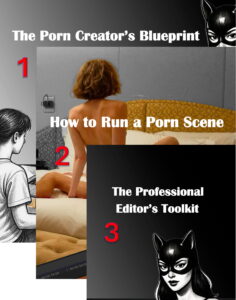
The Home Porn Filmmaker System
This bundle covers the full process of creating watchable, intentional home porn – from planning and identity, through filming and performance, to editing and final delivery.
Instead of random tips, you get a complete system: how to think before the shoot, how to run the scene while filming, and how to shape raw footage into a finished video people actually want to watch, rewatch, pay for and subscribe for more.
Guide 1. The Porn Creator’s Blueprint
Focuses on before filming.
It teaches how to think, plan, choose direction, define your identity, avoid mistakes, and design scenes with intention instead of randomness.
Guide 2. How to Run a Porn Scene
Focuses on during filming.
It shows how to guide performance, control pacing and energy, and make real sex look good on camera without breaking the mood.
Guide 3. The Professional Editor’s Toolkit
Focuses on after filming.
It explains how to turn raw footage into a finished video through editing, pacing, shot selection, and visual structure.
Transform Your Clips Into Fans
Purchase all three guides — The Home Porn Filmmaker System (Complete BUNDLE) — with the discount only for $35.97, and get the mind map “Finding your OnlyFans Niche” for free!